
If you’ve seen any content around Digger, you’ve probably seen some variation of someone saying it’s impossible to talk about without giving the game away. Scroll away. Spoilers incoming. See this and then come back. I share this impulse, but as someone who had no urge to see the film based on the marketing, I do want to attempt to talk about why you should see this. Maybe talking about Digger is impossible without giving the game away, so I’ll try and talk around it for the beginning of this article. Reader, bear with me.
Digger, the real film, is not marketable. It would not draw in the type of profit Warner Brothers wants or is used to, so the marketing team were left with an impossible task. I think they did what they could, and the marketing of the film is itself an example of the film’s messaging in action. It overrelies on the image of Tom Cruise, it has no real information about the plot, and the colours are flat and bleak. The silly dancing and promise of SNL style satire were clearly not enough to draw in audiences, based on its disheartening box office performance, so I will flat out tell you that this movie is not what you expect. It is completely unique, has a vital message shown through some genuinely masterful scenes, and one of my favourite acting performances of the year (thank you, Riz Ahmed). A lot of the critics are missing the point, and the more grating aspects of the film are purposeful. But make no mistake, they are grating. I think it is completely possible to understand what Digger is doing, agree with the message, and still find it unwatchable. I found some scenes deeply irritating, with nonsensical dialogue and nails-on-chalkboard sound design. Parts of the B-plot feel underbaked, which is a real shame as it is here that I think the heart of the film is found. But I also believe in film being a means to challenge us, and I think a huge reason as to why audiences aren’t connecting is because of the discomfort Digger wants you to feel.
I’m going to talk spoilers now. Scroll away, spoilers incoming, see Digger and come back.
I want to be clear: I don’t think Digger is a masterpiece. Having large chunks of a film feel genuinely unwatchable is not good filmmaking, and when we spend too long without breaking away from the ‘Fossil Fools’ play, it becomes very one-note and frustrating to follow. This does not help Iñárritu make his point. What does help is the discussion of the values of satire. Kenny Rockwell’s presence. Digger’s discussion of story and narrative being eerily similar to Kenny’s. The entire ending sequence, which was what made me think so hard about the film’s messaging on the bus home and start writing this minutes after I arrived. Because as much as film and art can do, they cannot save us.
The first ever article I wrote for a uni paper was about how 2025’s Superman was inspiring hope around the world, and how it could very easily (and probably intentionally) be read as an allegory for the fight for Palestinian liberation. I felt so optimistic after watching, and remember tearing up at a highly shared image of a young Palestinian child walking through the wreckage of his home wearing a Superman cape. But it has been a year since Superman released, and Palestinians are still suffering and dying whilst receiving no help. Climate change grows more threatening by the minute, and leaders are focussing on momentary profits over the lives of everyone. A movie giving me hope didn’t change that. It inspired me on an individual level, and I would go as far as to say it probably saved the lives of individual people. But it did not change the world.
Digger provides no glimmer of hope. The closest thing it reminds me of is Cabaret, with a similar sobering reminder of reality after the end of the glitzy production within. It made me think of the 2021 West End production where it is revealed that Eddie Redmayne’s emcee is a Nazi, taking its usual message even further. Rather than being passively complicit, this cabaret is explicitly fascist. Art is not inherently noble.
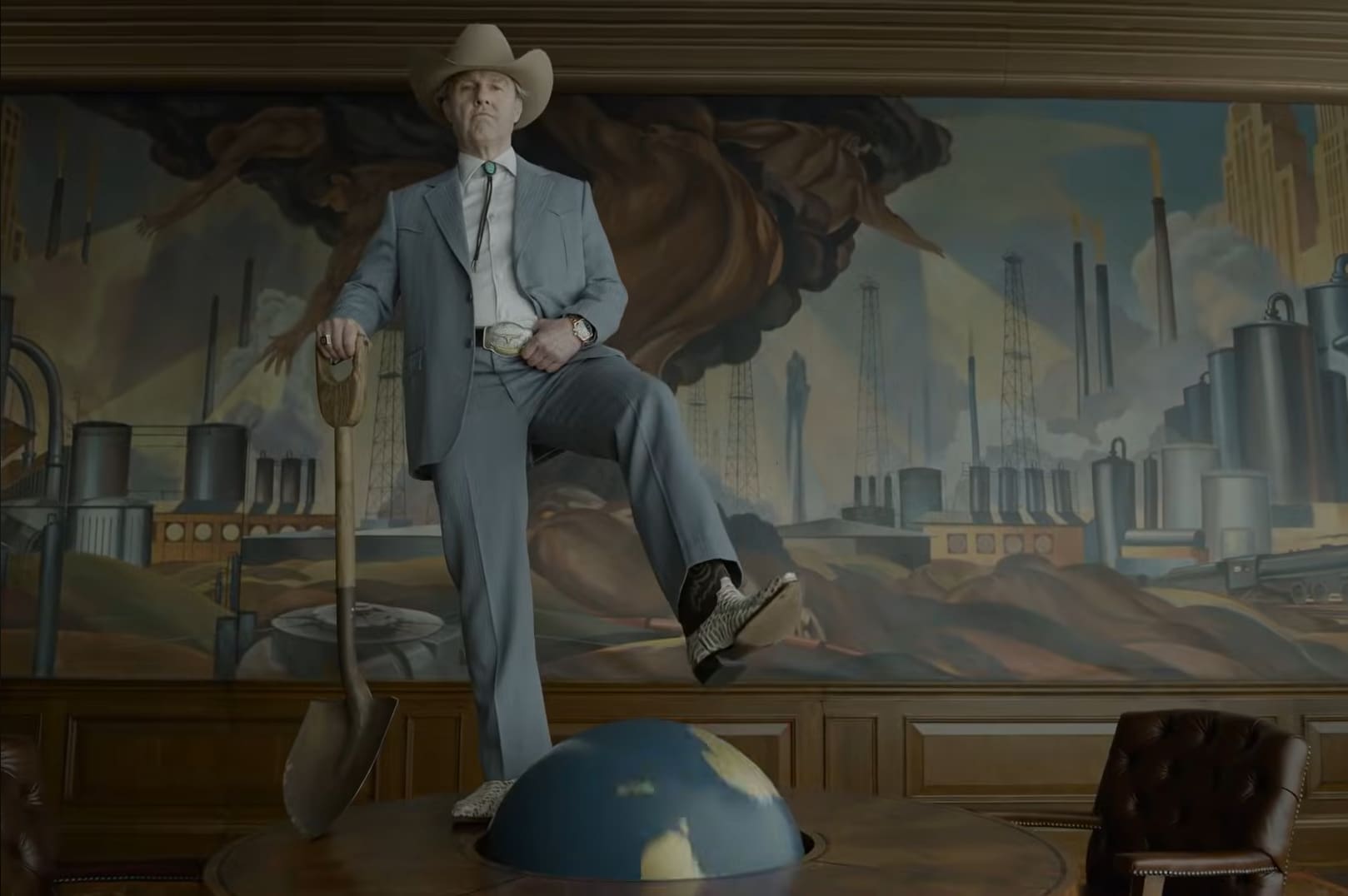
Kenny Rockwell is not outwardly evil the way the Digger Rockwell of the play is. But he did hide his connection to Digger Rockwell from the cast of the play until he feared its huge star would walk, and he did buy the rights to ‘Fossil Fools’ as soon as he saw it, and he did spend (in his words) “a gazillion dollars” on this production. We have to ask: is this the best use of his fortune? Could he not help the situation his family caused? His wealth is built off the suffering of humanity, and the audiences go and laugh and clap for his play before walking back into the destruction its producer’s family caused. It’s a deeply uncomfortable feeling to sit with.
I don’t know if Digger has an explicit message, and I certainly don’t think it is telling us that film and art as a whole are useless. But I am going to be less complacent after watching this. Maybe movies can’t save the world, but they can remind us that we have to.
Author: Rosa Prior (she/her)


